Walk into any craft store and you’ll find a whole wall of yarn: chunky, fuzzy, glittery, variegated, in every color you can think of. When you’re just learning to crochet, that choice can feel more confusing than exciting.
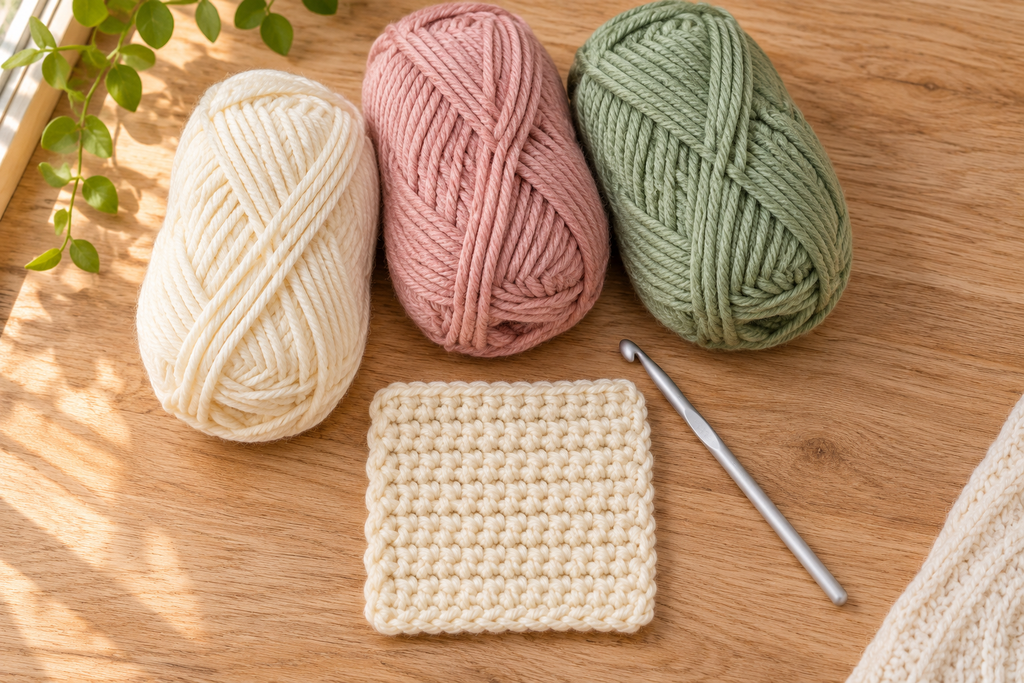
Here’s the good news: picking the best yarn for crochet beginners comes down to a few simple features. The right yarn makes it easier to see your stitches, count your rows, and fix mistakes. The wrong one can make even a basic single crochet feel frustrating.
In this guide, you’ll learn which yarn weight to start with, how different fibers behave, why color and texture matter so much, and how to read a yarn label so you can shop with confidence.
Quick Answer: What Yarn Should a Beginner Use?
If you want the short version, look for yarn that is:
- Medium weight (#4, often called worsted weight)
- Smooth, not fuzzy, bumpy, or furry
- Light or medium solid color, such as cream, light gray, pale pink, or sage
- Tightly twisted (plied) so it doesn’t split easily
- Acrylic or a cotton blend, which are affordable and widely available
Pair it with the hook size listed on the label, often around 5 mm (H-8) to 5.5 mm (I-9) for worsted weight, and you’re ready to practice.
Why Your First Yarn Matters So Much
When you’re learning, you need to see what your hook is doing. Every stitch has a structure: loops on the hook, the top “V” of the stitch, and the post (the vertical body of the stitch).
Beginner-friendly yarn shows that structure clearly. That helps you:
- Find where to insert your hook in the next row
- Count stitches so your edges stay straight
- Spot mistakes early, before they grow into a lopsided project
- Frog (rip out) your work easily when you need to start over
Difficult yarn hides those details. That’s why many new crocheters think they’re “bad at crochet” when the yarn is really the problem.
Understanding Yarn Weight (The Most Important Choice)
“Yarn weight” doesn’t mean how heavy a skein is. It describes how thick the strand is.
In the US, most yarn labels use the Craft Yarn Council’s numbered system, shown as a number inside a small skein-of-yarn symbol.

The Yarn Weight Chart, Simplified
| Number | Name | Common Terms | Beginner-Friendly? |
|---|---|---|---|
| 0 | Lace | Lace, thread | Not for beginners |
| 1 | Super Fine | Sock, fingering | Challenging |
| 2 | Fine | Sport, baby | Challenging |
| 3 | Light | DK, light worsted | Possible with practice |
| 4 | Medium | Worsted, aran | Best starting point |
| 5 | Bulky | Chunky, craft | Good option |
| 6 | Super Bulky | Super chunky, roving | Sometimes tricky |
| 7 | Jumbo | Jumbo, roving | Usually not ideal |
Why Worsted Weight Yarn Is Best for Beginners
Worsted weight yarn (#4) sits right in the middle. It’s thick enough to show each stitch clearly, but not so thick that it’s hard to manage.
It’s also the most common weight in beginner patterns. If you look at free dishcloth, granny square, or simple blanket patterns, many of them call for #4 yarn.
That means you can practice with one type of yarn and use it for lots of first projects.
What About Bulky Yarn?
Bulky (#5) yarn can also work well for beginners. Your project grows faster, and the stitches are large and easy to see.
Just know that it uses a bigger hook, and some chunky yarns are loosely spun, which can make them split. Choose a smooth, tightly twisted bulky yarn if you go this route.
Why to Skip Very Thin or Very Thick Yarn at First
Thin yarns (#0 to #2) need small hooks and produce tiny stitches that are hard to see and count.
Super bulky and jumbo yarns (#6 and #7) can be awkward to hold, and some are made of soft, loosely spun fiber that pulls apart. Chenille-style “blanket yarn” in these weights is also notoriously hard to read, because the fuzzy texture hides the stitches.
Choosing the Right Fiber for Beginner Crochet Yarn
Fiber is what the yarn is made of. Each fiber behaves a little differently on your hook.
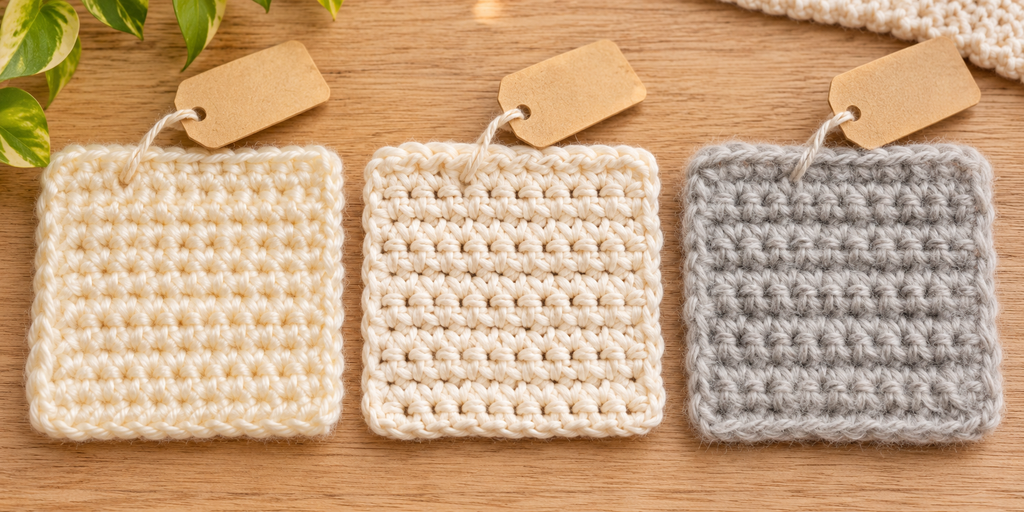
Acrylic Yarn
Acrylic is a synthetic fiber, and it’s one of the most popular choices for beginners.
Why beginners like it:
- Affordable, so practice mistakes don’t feel costly
- Easy to find in most US craft stores
- Usually machine washable (always check the label)
- Comes in a huge range of colors
- Has a little stretch, which is forgiving on tension
Things to know: Some acrylics feel a bit squeaky on the hook, and acrylic doesn’t hold up well to high heat, so avoid it for potholders or anything near a hot stove.
Cotton Yarn
Cotton is a plant fiber with a crisp, smooth feel. It’s a favorite for dishcloths, washcloths, and market bags.
Why beginners like it:
- Stitches look very clear and defined
- Doesn’t usually get fuzzy
- Absorbent and great for kitchen projects
- Handles heat better than acrylic
Things to know: Cotton has very little stretch. That can make it feel stiff and harder on your hands, especially if you crochet tightly. Some 100% cotton yarns are also loosely plied and can split.
Cotton Blends
Blends that mix cotton with acrylic (or another fiber) often give you the best of both: clear stitches from the cotton and a bit of softness and stretch from the acrylic. They’re a great middle-ground choice.
Wool Yarn
Wool is an animal fiber that’s warm, springy, and pleasant to work with.
Why it can be nice: Wool’s natural elasticity is forgiving, and it holds its shape well.
Things to know: It usually costs more than acrylic, some people find it itchy, and many wools need hand washing unless the label says “superwash.” Wool can also felt (shrink and mat together) if washed incorrectly.
Fibers to Save for Later
These fibers can be beautiful, but they’re tricky when you’re still learning:
- Mohair and other fuzzy yarns: The halo hides stitches and makes frogging very difficult.
- Bamboo, silk, and some rayon blends: Often slippery, with a tendency to split.
- Chenille and velvet-style yarns: Soft, but the texture hides stitch structure, and some can “worm” (loops pull out of the fabric).
Why Color and Texture Matter More Than You Think
Choose Light or Medium Solid Colors
Dark yarn like black, navy, or deep brown absorbs light. That makes it hard to see where each stitch begins and ends, especially in the evening or under dim lamps.
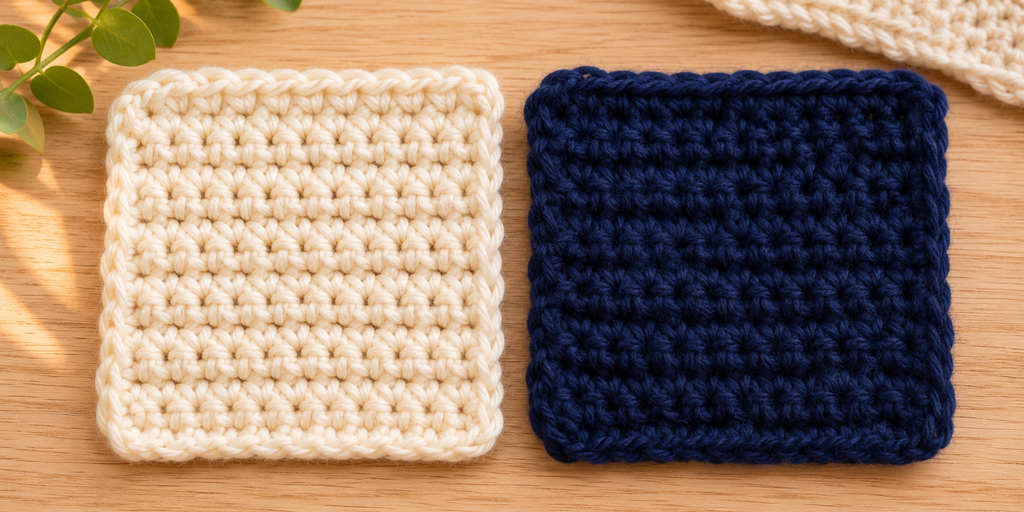
Light and medium solids show shadows between stitches, so the stitch structure stands out. Soft neutrals like cream, light gray, oatmeal, pale pink, and sage are all great choices.
Be Careful With Variegated and Self-Striping Yarn
Variegated yarn changes color along the strand. It’s fun, but the shifting colors can make individual stitches harder to pick out. Save it for when you can confidently count stitches by feel.
Look for a Smooth, Plied Yarn
Most yarn is made of several thinner strands, called plies, twisted together. A yarn with a firm, even twist holds together well under your hook.

Avoid these textures when you’re starting:
- Boucle: Loopy and bumpy
- Eyelash or “fur” yarn: Long fibers hide everything
- Thick-and-thin yarn: Uneven thickness makes tension inconsistent
- Single-ply, loosely spun yarn: Splits easily and can pull apart
Quick test: Gently untwist the end of the yarn. If it separates into a fluffy mess almost immediately, it’ll probably split while you work.
How to Read a Yarn Label
The yarn label (also called a ball band) tells you almost everything you need to know before buying.
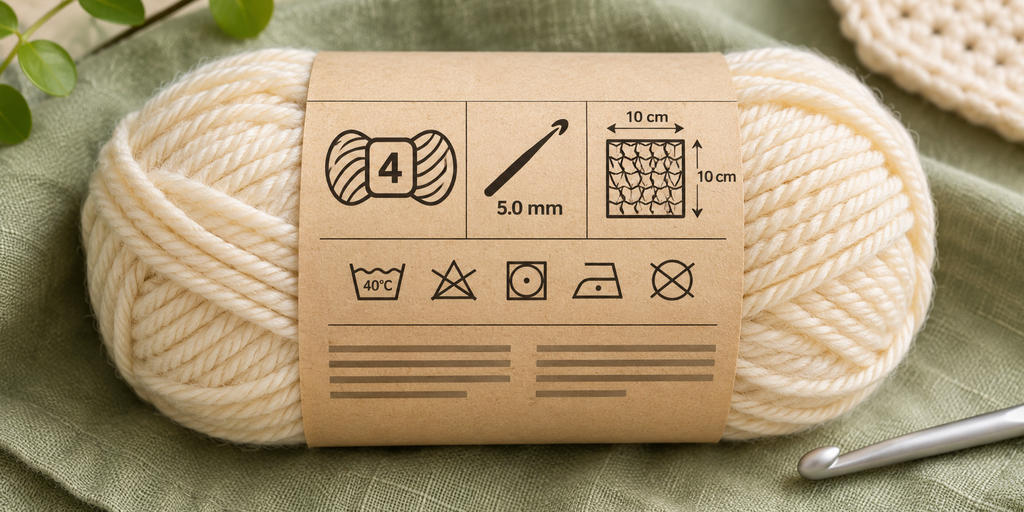
Key Information on the Label
- Weight number: The number in the skein symbol, such as 4 for medium
- Fiber content: For example, 100% acrylic or 50% cotton / 50% acrylic
- Length and weight: Shown in yards and meters, plus ounces and grams
- Recommended hook size: Often shown next to a small crochet hook symbol
- Gauge: How many stitches and rows fit in a set measurement
- Care instructions: Washing and drying symbols
- Color name and dye lot number
Crochet Hook Size for Yarn
Many labels show two symbols: knitting needles and a crochet hook. Make sure you’re reading the one with the hook.

US hooks usually list both a letter/number and a metric size, such as H-8 (5 mm). The metric size is the most precise, so use it when comparing hooks.
If a label only lists knitting needles, a hook in the same size range is a reasonable starting point. You can always adjust if your fabric feels too tight or too loose.
What Is a Dye Lot?
A dye lot is a batch of yarn dyed at the same time. Colors can vary slightly between batches.
If your project needs more than one skein, buy all of it with the same dye lot number so the color stays consistent. Many labels also offer “no dye lot” yarns, which are designed to match across skeins.
Good First Projects for Your Beginner Yarn
Once you have your yarn, these projects make great practice:
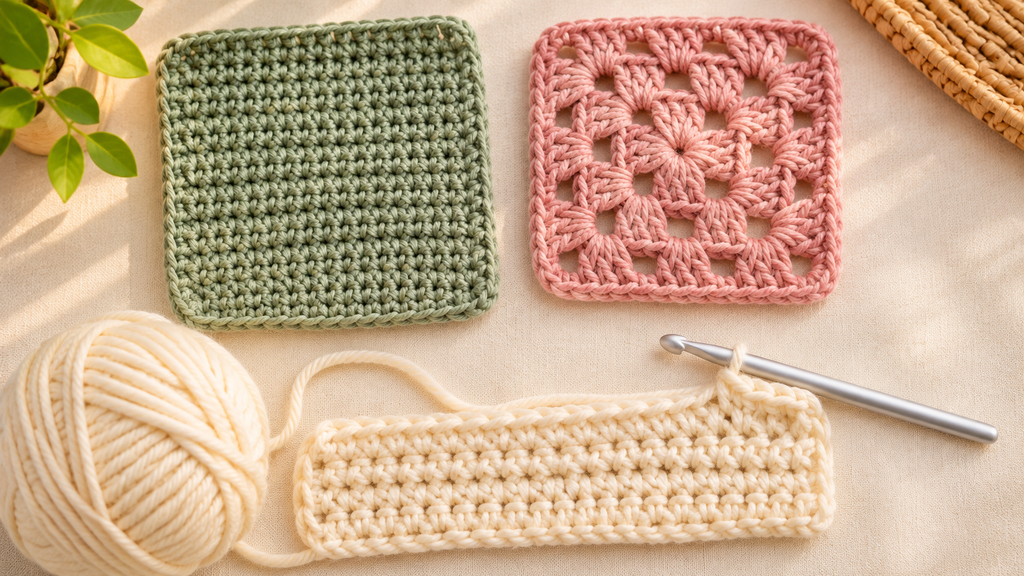
- Dishcloth or washcloth: Small, quick, and perfect for cotton or cotton-blend yarn
- Simple scarf: Lets you repeat the same stitch until it feels natural
- Granny square: Teaches working in rounds and changing colors
- Practice swatch: A small square of rows to test stitches and tension
Beginner Tips for Buying and Using Yarn
- Buy one or two skeins to start. You don’t need a big stash to learn.
- Hold the yarn before you buy it. Squeeze it and look at how it’s twisted.
- Save the label. Tuck it in your project bag so you know the hook size, care instructions, and dye lot later.
- Make a practice swatch first. Crochet a few rows to see how the yarn behaves before starting a real project.
- Use good lighting. Even beginner-friendly yarn is easier to read near a window or under a bright lamp.
- Match the pattern’s yarn weight. If a pattern calls for #4 yarn, use #4 yarn so your project comes out the right size.
Common Mistakes and How to Avoid Them
Picking Yarn Only Because It’s Pretty
Fuzzy, sparkly, and dark yarns are tempting, but they make learning harder. Fix: Start with a smooth, light yarn, and treat the fancy skein as a reward for later.
Using the Wrong Hook Size
A hook that’s too small creates stiff, tight fabric. Too large, and your fabric looks loose and holey. Fix: Start with the hook size on the label, then adjust by half a millimeter if needed.
Ignoring Dye Lots
Running out of yarn and buying a new skein from a different dye lot can leave a visible color band. Fix: Buy enough yarn for your project at once, all from the same dye lot.
Choosing Splitty Yarn
When your hook keeps catching only part of the strand, stitches look messy. Fix: Pick a tightly plied yarn, and try a hook with a rounder tip.
Washing Projects Incorrectly
Hot water and a dryer can shrink wool or damage some acrylics. Fix: Follow the care symbols on your saved yarn label.
Frequently Asked Questions
What is the best yarn weight for crochet beginners?
Medium weight (#4), also called worsted weight, is the most common recommendation. It shows stitches clearly, works with mid-size hooks, and is used in many beginner patterns.
Is acrylic or cotton yarn better for beginners?
Both can work well. Acrylic is affordable, slightly stretchy, and forgiving. Cotton shows crisp stitches but has little stretch, so it can feel stiff. A cotton-acrylic blend is a nice in-between option.
Why is my yarn splitting while I crochet?
Splitting usually happens with loosely twisted yarn, very sharp hooks, or fibers like bamboo and some cottons. Try a more tightly plied yarn or a hook with a rounder head.
Can beginners use chunky blanket yarn?
You can, but fuzzy chenille blanket yarn makes it hard to see stitches. If you want a chunky yarn, choose a smooth bulky (#5) yarn first, then try plush blanket yarn once you’re comfortable.
What size crochet hook should I use with worsted weight yarn?
Check the label first. Many worsted weight yarns suggest hooks around 5 mm (H-8) to 5.5 mm (I-9), though some list a slightly larger range. Adjust based on how your fabric feels.
How much yarn do I need for my first project?
It depends on the project. A dishcloth often needs less than one skein, while a scarf or blanket needs more. Your pattern should list the yarn amount in yards or meters, so compare that number with the yardage on the label.
Final Thoughts: Start Simple and Enjoy the Process
Choosing the best yarn for crochet beginners isn’t about finding one perfect brand. It’s about picking yarn that helps you learn: medium weight, smooth, light-colored, and tightly twisted.
Once you can see your stitches clearly, everything else gets easier. You’ll count more accurately, fix mistakes faster, and build confidence with every row.
Grab a skein of beginner-friendly yarn, a matching hook, and start with a simple swatch or dishcloth. The fancy yarns will still be there when you’re ready for them.